Chef’s Table: Michelin star chef Hélène Darroze on fine dining – “It is important to continue evolving”
By Shivani Dubey | 21 September 2026 | Food & Drink
Tempus’s Chef’s Table series meets three-Michelin-star chef Hélène Darroze to talk aiming for the ‘fourth Michelin star’ and her comfort favourite foods
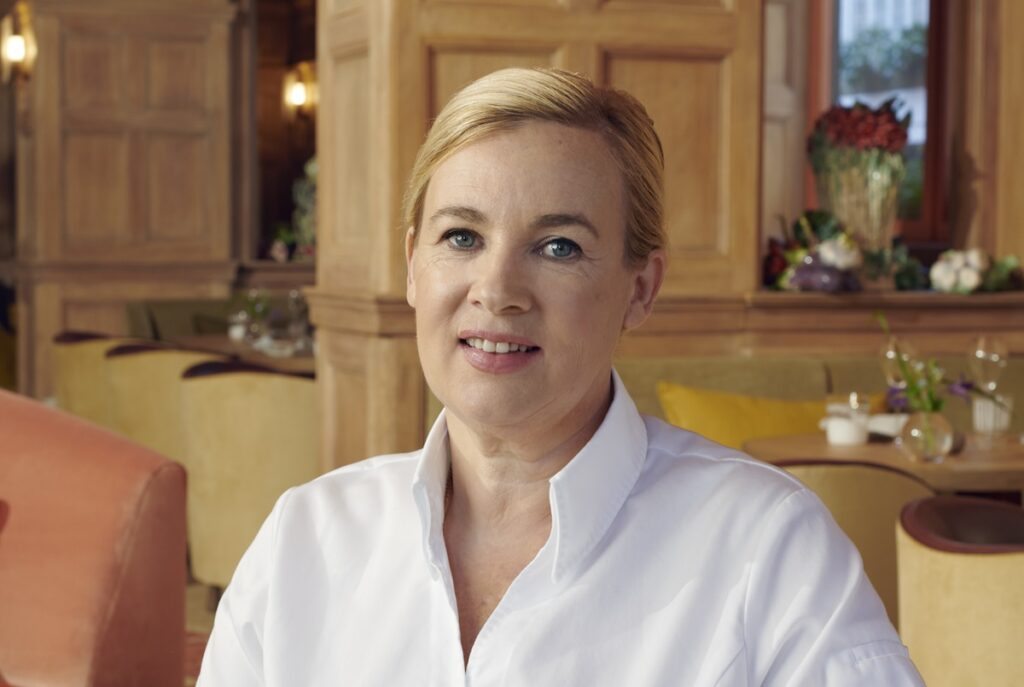 Chef Hélène Darroze comes from a long line of chefs. Being the fourth-generation in a family of chefs, she grew up learning everything there is to know about the culinary profession. However, it didn’t take long for her to become one of the best chefs in the business.
She has worked with esteemed chefs like Alain Ducasse, and when she opened her first flagship restaurant in Paris in 1999, it quickly gained two Michelin stars. And to top it off, she was also the inspiration for the character Colette in the 2007 film Ratatouille. It is safe to say that the acclaimed chef has well and truly carved a name for herself in the annals of culinary history. She is one of only seven women to hold three Michelin stars for their restaurants, Hélène has taken Hélène Darroze at The Connaught to newer heights.
She recently launched an a la carte lunch menu at the restaurant – an extremely rare move for a restaurant of this calibre. But as Hélène says, it is important to continue evolving – a philosophy she has carried with her every single time she’s donned the chef whites. For Hélène, gastronomy offers her the ultimate opportunity to deliver the pinnacle in hospitality. In her own words, “to cook is to live and to live is to cook.” Her earliest inspiration always came from the very best in seasonal ingredients and to this day remains integral to her kitchen.
So for a new instalment of our Chef’s Table series, we speak to chef Hélène Darroze about the challenges of running a three-Michelin-star restaurant, her favourite French food spots in London, the evolution of the fine dining industry and her comfort favourite foods.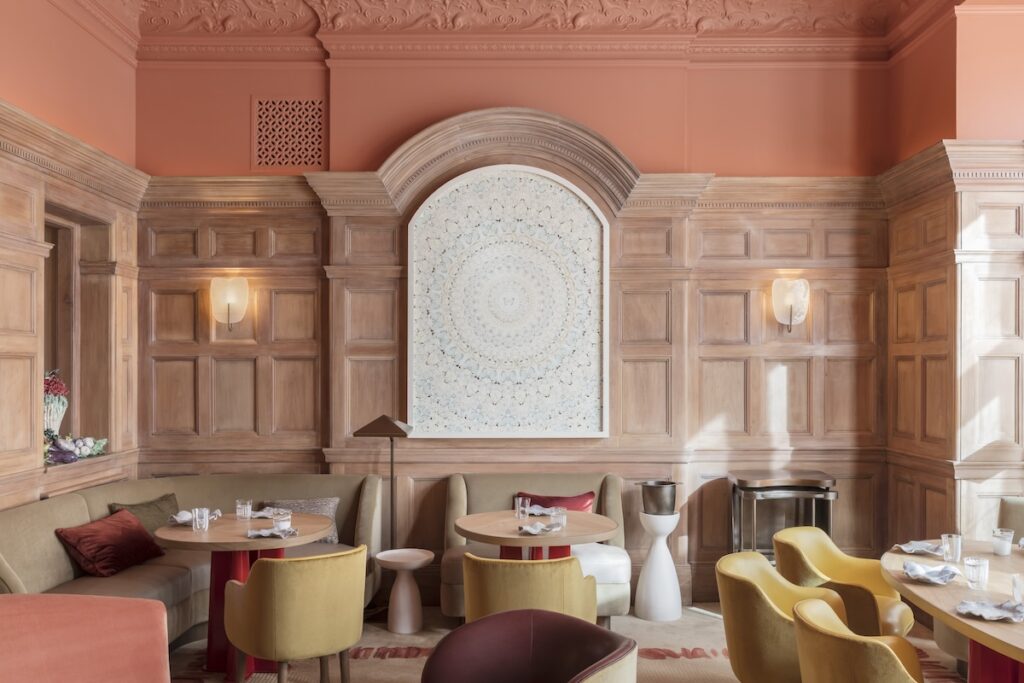 You head up the three Michelin-starred Hélène Darroze at The Connaught. What sets your menu apart?
For me, it is always about the product and the emotion. I want the ingredients to be the stars of the plate, and my role is to respect them and allow them to express themselves. I am very connected to the producers I work with. I want to know where a product comes from, who has produced it and why it is special. This connection gives the cuisine a sense of identity. My cuisine is very personal and is connected to my memories, my roots and the places that have influenced me. I want every dish to give pleasure and, ultimately, to make people happy.
How would you describe your style as a chef? What do you want your guests to experience when they come to your restaurants?
I would describe my cooking as instinctive and emotional. It is French at heart, but it is also influenced by all the places and people I have encountered throughout my life. I don’t want to cook simply to demonstrate technique. Of course, technique is important, but it is a tool. What matters to me is what you feel when you eat. When guests come to my restaurants, I want them to feel that they are coming into my home. I want them to feel welcomed, to discover something, to have a beautiful experience and, most importantly, to leave happy.
Where did your passion for cooking come from?
It comes from my family. I am the fourth generation of my family to become a chef, so food has always been part of my life. I grew up in the kitchen of my family’s restaurant in the south-west of France, surrounded by my parents, grandparents and great-grandparents. But it was not only about cooking. It was about the whole world around food – the producers, the farmers, the fishermen, the markets and the pleasure of welcoming people around a table. My cooking is also deeply influenced by my terroir – Les Landes and the Basque Country. These places, their produce, traditions and way of life have shaped the way I cook and the way I think about food. From a very young age, I understood that food could bring happiness. That is probably the most important lesson I took from my family, and it is still what motivates me today. 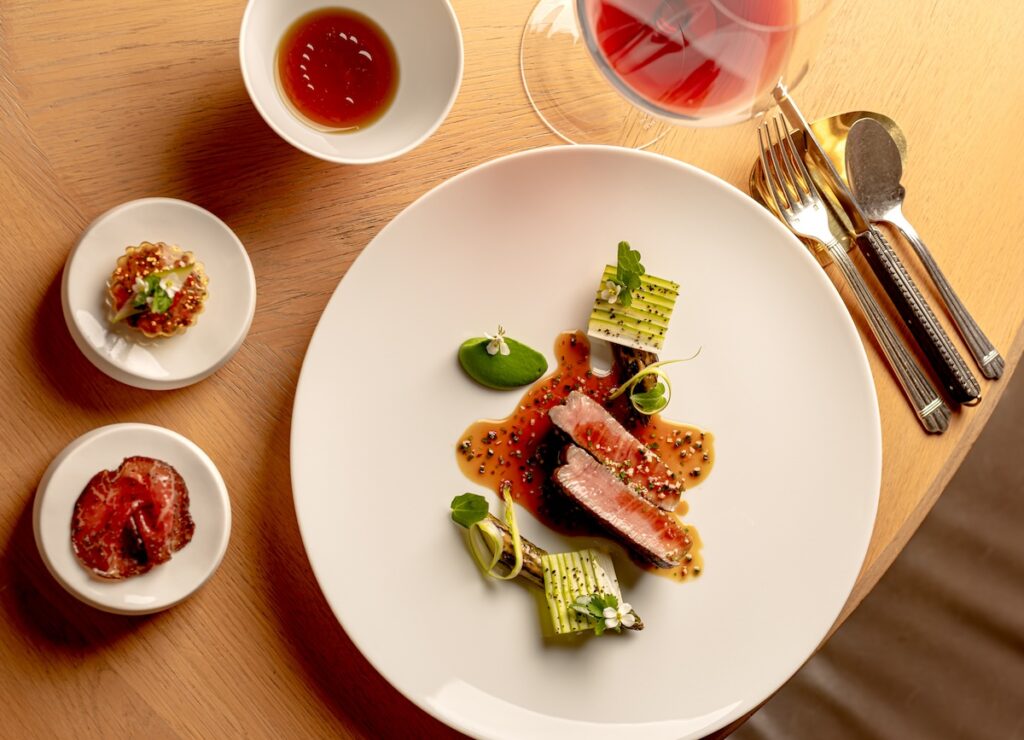 Running a three-Michelin star restaurant is hard work. Have you found any particular challenges of raising the bar from a 2 to a 3?
The real challenge is not only reaching three stars, but maintaining that level every single day. Consistency is incredibly important. Every plate, every service and every guest must receive the same level of attention. And you cannot do it alone. A three star restaurant is the work of a team, and everyone has to share the same passion and desire to give the guests the very best experience. I always tell the team that we are aiming for the fourth Michelin star. Of course, there is no fourth star, but I say it because we should never think that three stars means we have reached the end. There is always something we can improve, something we can learn and another level we can reach.
Hélène Darroze at The Connaught has launched an a la carte menu, which is very rare for a restaurant at this level. What was the drive behind this new menu?
I wanted to give our guests another way to experience the restaurant. It also gives them the opportunity to enjoy a quick lunch, perhaps with just one dish and a glass of wine, if that is what they are looking for. I think it is important to continue evolving. After so many years at The Connaught, I wanted to offer our guests more choice and freedom in how they experience the restaurant. The tasting menu is a very particular experience. It asks the guest to give themselves completely to the chef and to follow the journey we have created. I love that style of dining, but I also wanted to give our guests the possibility to choose what they are really in the mood for and how they want to experience the restaurant. But the philosophy has not changed. Whether you choose one dish or follow the full menu, the quality of the ingredients, the cooking and the experience must always be at the same level. 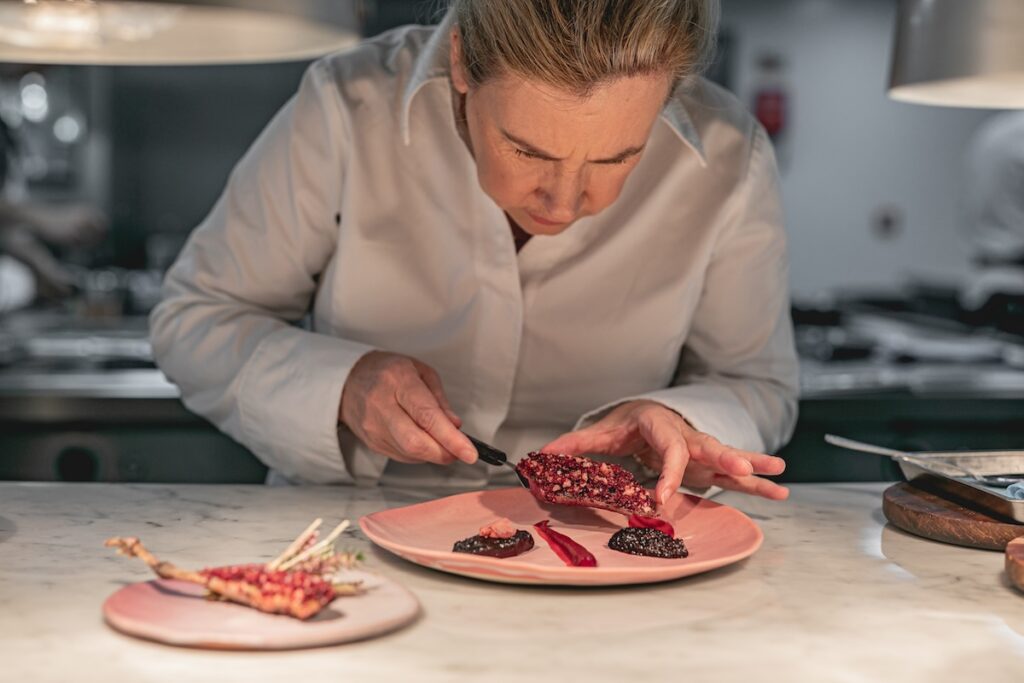 You are one of only seven women to hold three Michelin stars for their restaurants. Cheffing is still a male dominated industry in the fine dining space. Does this raise particular challenges to you? Is this changing with the success of chefs like yourself, Clare Smyth, Dominique Crenn, Lisa Goodwin Allen and more?
It is true that the industry has traditionally been very male dominated, particularly at the highest level. When I started, there were very few women around me in professional kitchens. But I never wanted to think that being a woman was something that should limit me. I simply wanted to be myself and to do my work as well as I could. I am very happy to see more women succeeding today. Clare, Dominique, Lisa and many other women are showing that there is not one way to be a chef or to lead a kitchen. I also hope that one day we won’t need to speak about “female chefs” in the same way. I would like young women entering the industry to believe that anything is possible, without thinking that their gender is an obstacle. When I received three stars, I thought especially about all the women working in kitchens and wanted them to know that they could achieve it too.
Do you have a favourite French food spot in London?
I would say Joséphine. I love the simplicity of it – classic French dishes, good ingredients and very well-executed cooking. It feels very authentic, which is what I look for when I go out for this kind of food. I used to visit the Chelsea location quite often, but since the Marylebone one opened, it has become my favourite simply because it is so close to The Connaught. It is an easy place to go for a good plate of French food and a glass of wine.
Away from the restaurant, what is your ultimate personal comfort food or favourite dish?
It has to be a roast chicken from the Landes, my home region in south-west France. For me, it is the kind of food that doesn’t need to be complicated. A beautiful chicken, roasted properly, with wonderful crispy potatoes and a little bit of jus. I have always loved potatoes as well. There are so many ways to cook them, and each one brings something different. Sometimes the simplest things give you the greatest pleasure. 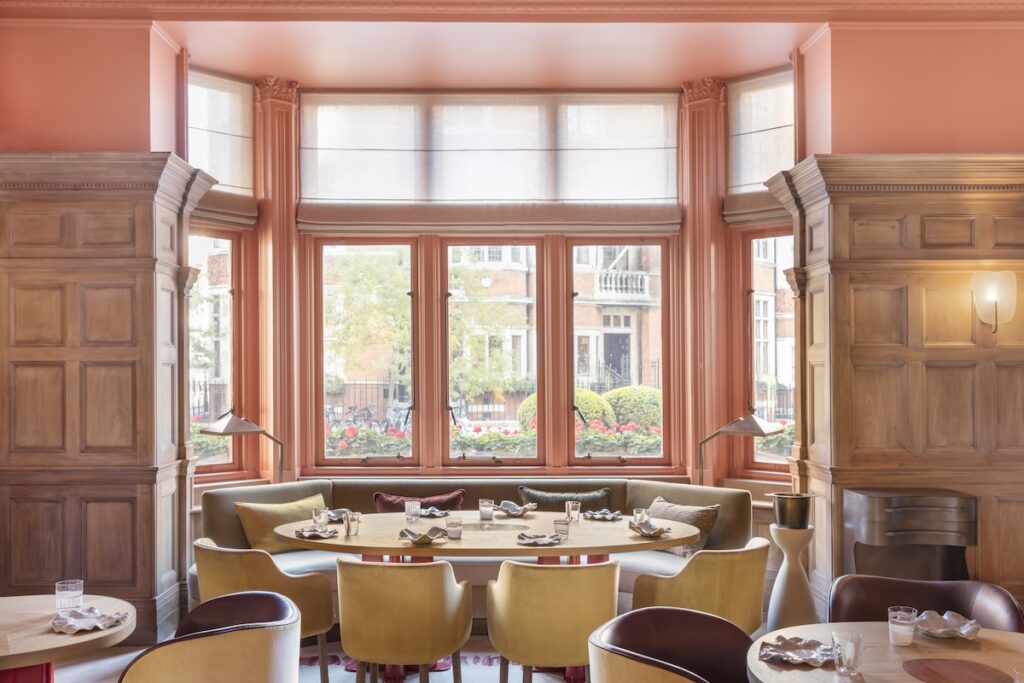 Why is this a comfort food to you? Do you have any special memories associated with the dish?
Because it takes me straight back to home and to my childhood. In my family, food was always about sharing and generosity. I remember the Sunday lunches, the family around the table and the smell of something roasting in the kitchen. Those memories are very strong for me. The chicken also reminds me of the way my family cooked in the Landes. It was always about using a beautiful product and not doing too much to it. When you grow up with those flavours, they stay with you.
Who are some of your chef heroes?
There are many. Michel Guérard had a big influence on me. I have known him since I was a little girl, and I spent many hours listening to him speak about food. He was someone with a very curious mind and a wonderful way of looking at the world. Before he passed away, I used to visit him at his restaurant, Les Prés d’Eugénie, two or three times a year. He was a mentor to me, and his influence has stayed with me.
Alain Ducasse has also been extremely important in my career. I had the opportunity to work with him early in my professional life, and I learned an enormous amount from him – not only about cooking, but about discipline, excellence and the importance of the product. Michel Bras was also very important to me when I started working as chef in my family’s restaurant in Les Landes. At that time, we would speak on the phone almost every day. He gave me so much advice, and his vision of food and his passion for his land were incredibly inspiring to me.
My grandmothers are also among my greatest influences. They were not chefs in the professional sense, but they taught me so much about ingredients, generosity and the importance of cooking with feeling.
To know more about Chef’s Table, subscribe to our weekly newsletter, the Tempus Edit — and read other interviews in our Chef’s Table series.