Chef’s Table: Michelin star chef Jun Tanaka on Wimbledon, Champagne Lanson and his love of seafood pasta
By Shivani Dubey | 19 May 2026 | Food & Drink
Tempus’s Chef’s Table series meets Michelin star chef and Champagne Lanson ambassador Jun Tanaka to talk cooking at Wimbledon and his comfort favourites
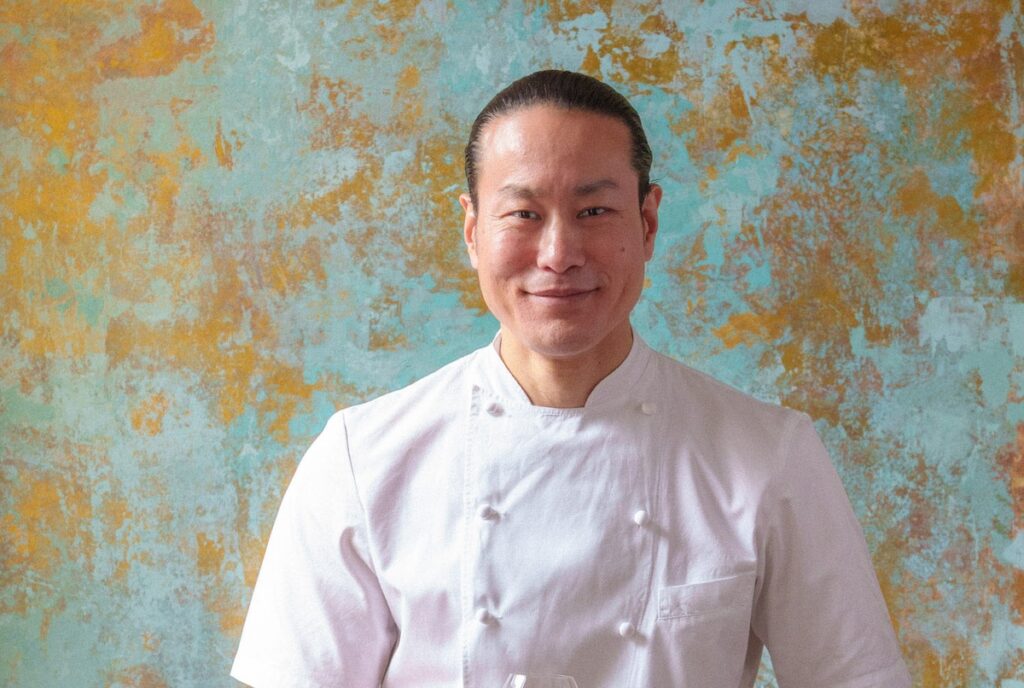 Chef Jun Tanaka has quite a few feathers in his cap. He’s the man behind Fitzrovia’s Michelin-star restaurant The Ninth. He is also Champagne Lanson’s chef ambassador, gearing up to cook a special menu for the upcoming Wimbledon Tennis Championships, of which the brand is the official champagne partner.
And while chef Jun is a decorated chef in his own right, having worked with some of the greatest Michelin-starred chefs including Nico Ladenis, Phil Howard and Marco Pierre White, what truly sets him apart is his strong stance on maintaining a positive work culture in an industry known for its high stress environment. For Jun, cultivating a harmonious relationship with his staff and his colleagues is paramount, which then also reflects in the high quality of food served at The Ninth.
So, with the Wimbledon Tennis Championships inching closer, we sat down with chef Jun Tanaka for a new installment of our Chef’s Table series. Here, chef Jun tells us all about his partnership with Champagne Lanson and Wimbledon, his mission to cultivate a positive work culture in the culinary industry, and his love for Italian seafood pasta dishes.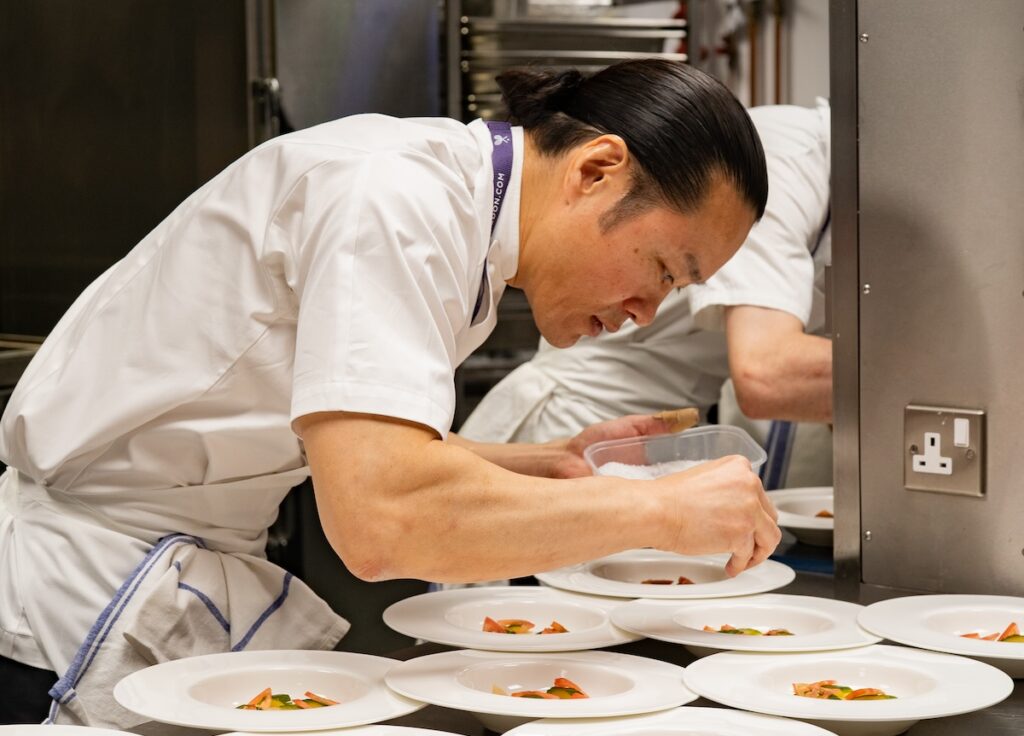 You head up the Michelin-starred The Ninth in Fitzrovia. What sets your menu apart?
When we opened The Ninth in 2015, the idea was to have a relaxed neighbourhood restaurant. A place that you can come to when you don’t feel like cooking at home, have a couple of plates, a glass of wine, and not only just for special occasions. So when we earned the Michelin star, it came as a complete surprise – a very nice one, but a surprise. And the food reflects the service and the atmosphere of the restaurant. It is relaxed, it’s approachable, it’s elegantly simple, and our dishes are created to bring out the natural flavour of the ingredients.
How would you describe your style as a chef? What do you want your guests to experience when they come to your restaurants?
I did all my training in very classic French restaurants like Le Gavroche, Marco Pierre White…so the foundation of our recipes at The Ninth are French. I prefer fresher, more vibrant flavours, so every dish that we have has a Mediterranean influence. When I taste a dish, whether it’s at The Ninth or out in a restaurant, I want to know what I’m eating – that when I close my eyes, I can tell what the ingredients are, and that’s really important for us. I want the guests to feel like they’re coming round to my house for dinner. I want them to feel warm and comfortable and create a space that they can be completely themselves.
Where did your passion for cooking come from?
I’ve always loved eating, and when I was growing up, the family dinner was the highlight of my day. My mom is a really good cook. She would have a lot of cookbooks to try new recipes, and I remember being very excited when we used to have guests around for dinner because she would go out of her way. The prep would start 23 days beforehand, and then the fridge would fill up with containers, cling film with all different dishes, and I would hang around and taste everything. Loving to eat so much, it felt very natural for me to want to learn how to cook.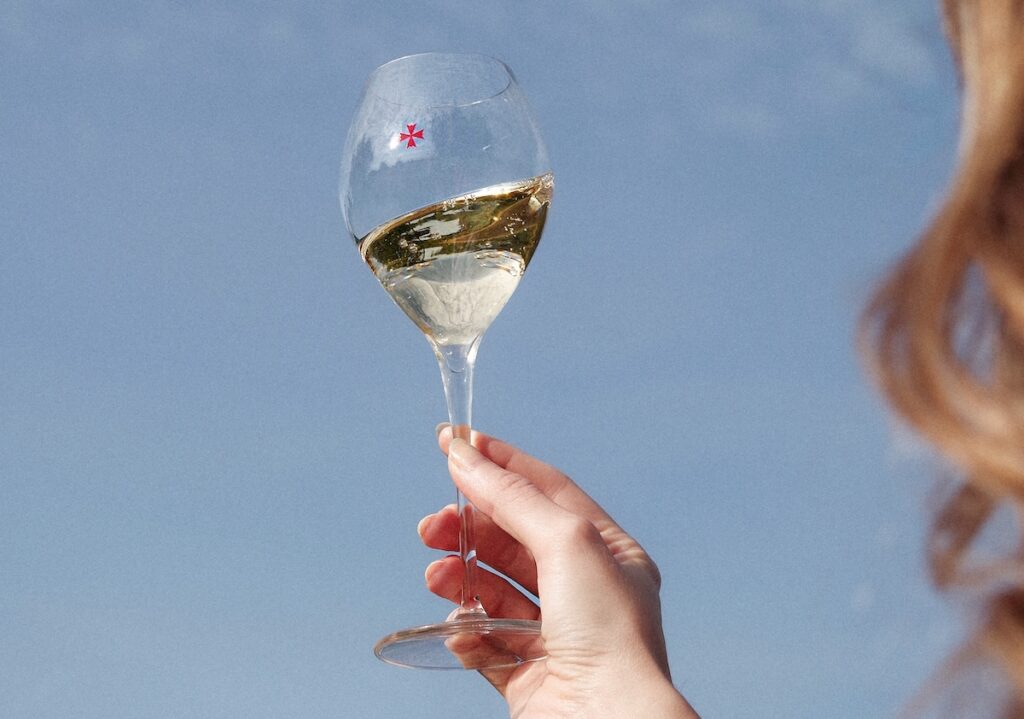 You are also the chef ambassador for Champagne Lanson. How did this partnership come about?
[The Champagne Lanson] team was looking for a UK ambassador, and came round for lunch in November 2023. After they had lunch, I spoke with them, and it felt like a very natural fit. Their signature style is freshness and precision and that’s how we create our dishes as well. Also, Champagne Lanson’s values of openness, creativity, loyalty and transparency are something that we resonate with at The Ninth. But most importantly, it’s the people. They are genuinely warm, hospitable and so welcoming.
In January 2024, they invited Jim – my business partner – and I, to their vineyards. They gave us a tour of their wine cellars, which is seven kilometres long. There was one particular dimly lit corridor which holds all their old vintages from 2004. At the end of this corridor, there was a tasting table with one single bottle of champagne unmarked, and they gave us a glass to taste from this bottle. It was incredible – delicate bubbles, complexity of flavour…The bottle was from 1971, which is the year that Jim and I were born. I was blown away. It’s that kind of genuine hospitality that goes beyond expectations, which really stayed with us.
Champagne Lanson obviously has a massive presence at Wimbledon, for which you’re designing a special menu. Can you tell us a bit about it? How are you incorporating the champagne into the menu?
Cooking at the Champagne Lanson suite is the highlight of our year, not just for me but for the entire team. We get very excited about it. Wimbledon has a unique atmosphere. It’s the iconic colours – the dark green and the purple, and the ivy on Centre Court – and there’s an energy which is very special. For starters, [our menu] is our take on strawberries and cream with heritage tomatoes, pickled cucumber, pickled green and red strawberries. For the main course, we’ve got chargrilled sea bass, and we serve that with a giardiniera, which is an Italian recipe for pickled vegetables. And for dessert, we’ve got poached apricots with fig leaf oil and yoghurt ice cream. And each dish is paired with a Champagne Lanson cuvée.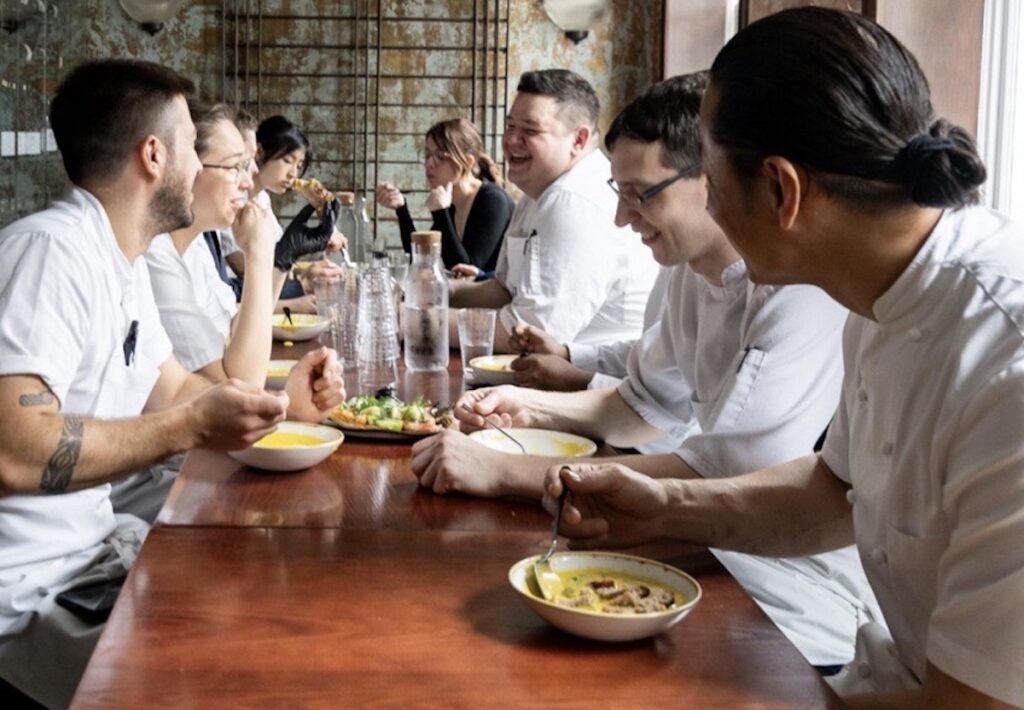 You have always stressed the importance of a positive work culture in the kitchen. For a profession known to be incredibly high-stress and challenging, how do you maintain a positive vibe in the kitchen?
Positive culture within a kitchen comes from the leaders, and we have to shape the culture. As leaders, the most important thing is that we’re very self-aware about how we show up to work in a positive way. We are aware of our behaviour, tone of voice, and body language, because the team around us follows what we do, not what we say. So it’s incredibly important that our words and actions align, which builds trust within the team, and it’s our responsibility to create an environment within a kitchen or a restaurant where people feel psychologically safe, which means that they’re not afraid to make mistakes. That they know they can voice an opinion and they will be listened to and understood, and the way we do that is we have to lead by example, so when we make a mistake, we own up to it and we apologise to the team.
Communication is super important. We are transparent about where the business is in terms of the profit and loss, because that gives everyone an understanding of the bigger picture and they feel part of the business. It’s really important that when something happens, we focus on solving the issue, not blaming. Also, the feedback has to go both ways. So we encourage every single senior person in the business to give us feedback because the higher we become in our position, the less feedback we get. And then we become less self-aware. So it’s all these things combined. Culture is intentional. We have to shape it.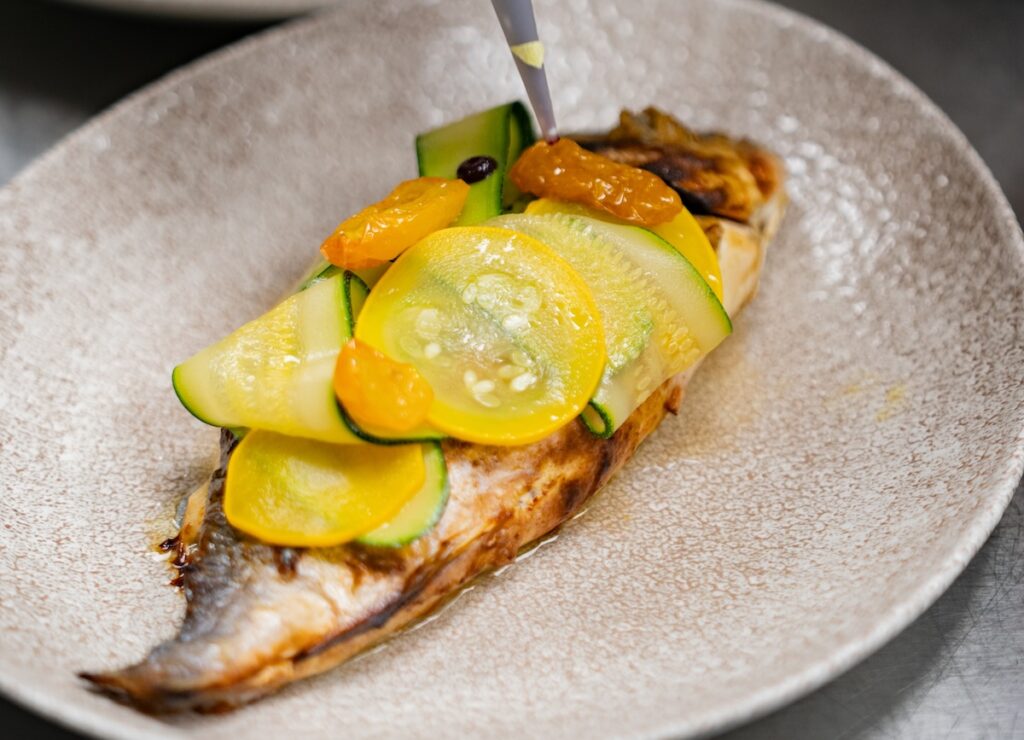 Away from the restaurant, what is your ultimate personal comfort food or favourite dish?
My favourite dish, and also comfort food, is seafood pasta – specifically, shellfish pasta. It combines two of my favourite things: shellfish and pasta. It can be mussels, clams, prawns, or a sea urchin, because the juice that you get from shellfish makes the most delicious sauces. It is nature’s best sauce, it really is.
Why is this a comfort food to you? Do you have any special memories associated with the dish?
My wife and I, our happy place is Italy. We got married in Puglia, and one of their specialties is sea urchin pasta spaghetti. And along the coastal road in Puglia, there are these seafood shacks along the coast, and they all serve sea urchin spaghetti. And when we were there, we used to have one every single day. There’s nothing better than having a plate of seafood pasta just sitting on the coast. Just thinking about it makes me happy.
Who are some of your chef heroes?
There are two: Joel Antunes and Eric Chavot. With Joel, it wasn’t just the food that inspired me, it’s how he ran his kitchen. And I remember he insisted that all of us – the kitchen, the front of house – sit down together in the restaurant for lunch and for dinner. There were a lot of times I’d say I’m just too busy, but then he would say, ‘What do you need?’. And he used to help me finish my work so we can go and sit down together in the restaurant, and that sense of togetherness and support is something that we instill in The Ninth. With Eric, I was his sous chef at the Capitol Hotel, and he gave me the opportunity to put my own dishes on the menu at the Capitol, which was a gift. And I used to do tastings for him. I’d proudly present my creations, and he would look at it, and then he would pick ingredients off and ask me why they were on the plate. I’d look at him and say it’s because it looks nice. And then he said to me, ‘Don’t put ingredients on a plate unless it improves the flavour’, and that has always stayed with me.
To know more about Chef’s Table and chef Jun Tanaka, subscribe to our weekly newsletter, the Tempus Edit – and read other interviews in our Chef’s Table series.