Racing spirit: Inside the world of model car making with Amalgam Collection
By Michelle Johnson | 6 May 2026 | Cars & Yachts, Sport
As Amalgam Collection joins forces with Tempus to present two incredible cars commemorating the 2025 Formula 1 season, we speak to founder Sandy Copeman about the craftsmanship, precision and devotion that goes into every model
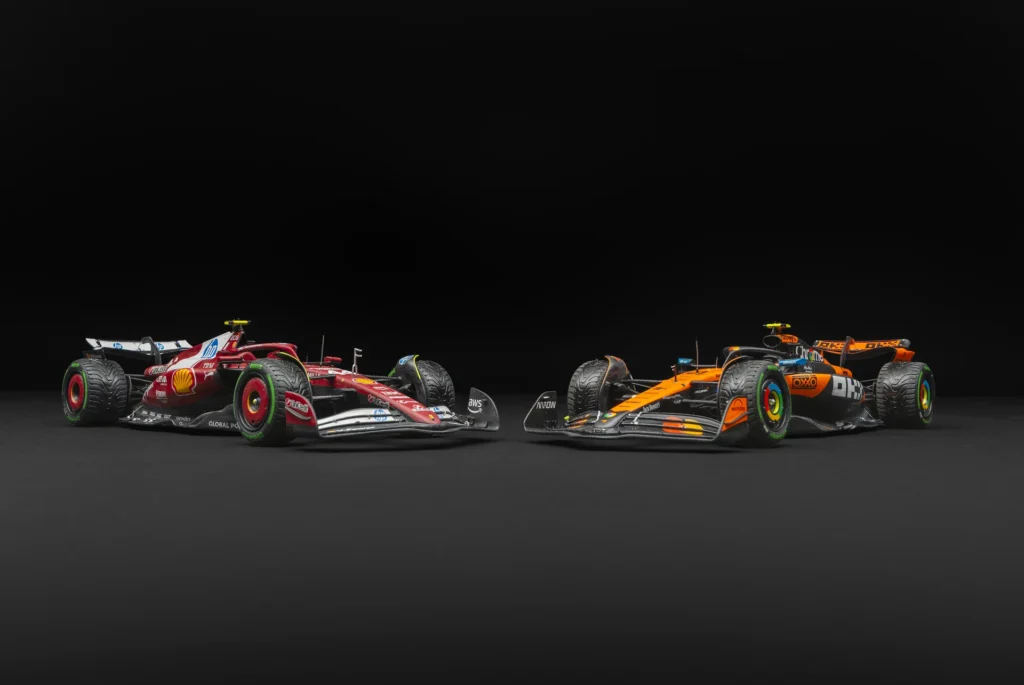 In the world of luxury automotive collectables – where car ownership is just the start of a lifestyle of design, style and objets d’art – a new category is quietly commanding attention: large-scale automotive models. Enter Amalgam Collection, whose founder Sandy Copeman has devoted nearly three decades to demonstrating that precision engineering is not just limited to the racetrack.
Established in 1985, Amalgam initially specialised in architectural models before pivoting to automotive replicas in the mid-1990s. Sandy’s vision was clear from the outset: these models would be loyal recreations, as detailed as the cars themselves. By 1998, Ferrari had come on board, beginning a partnership that would redefine what scale models could achieve. Working directly with manufacturers’ CAD data, original paint specifications and the expertise of marque historians, Amalgam began producing 1:18 scale models that weren’t interpretations – they were authoritative records of specific cars at specific moments in time.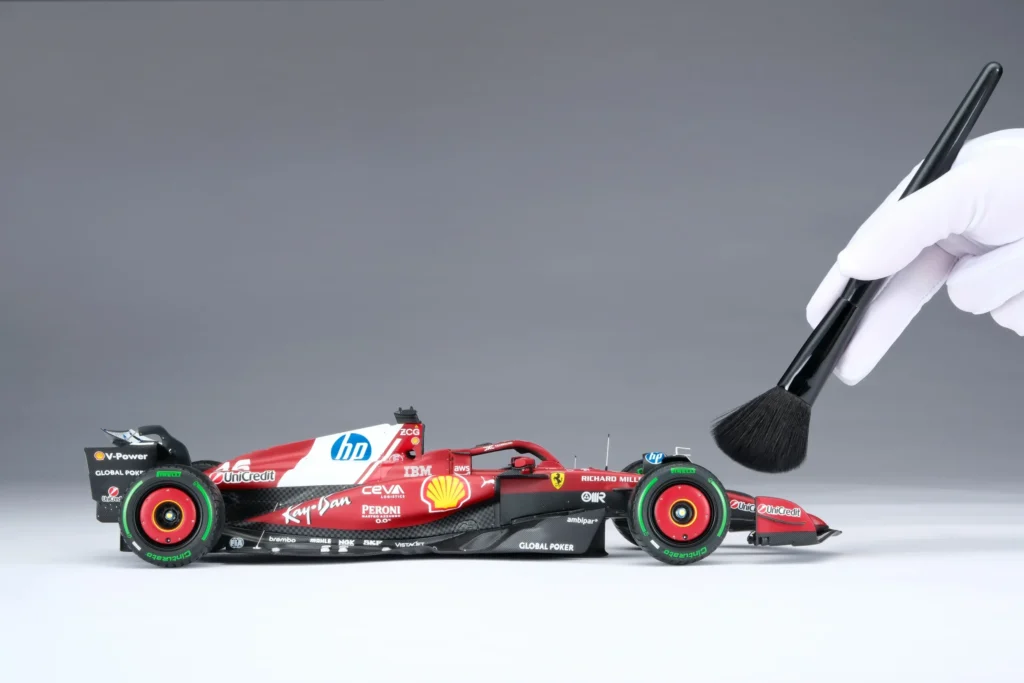 Today, each model is the culmination of thousands of hours of development and, in many cases, more than 2,000 individually engineered components. Every fastener, every surface finish, every mechanical assembly is recreated with forensic fidelity. Amalgam’s catalogue now includes iconic cars by Ferrari, Bugatti, McLaren, Lamborghini, Bentley and Mercedes-Benz, among others.
Beyond these historic masterpieces, Amalgam’s Tailor Made service allows owners to commission exact scale replicas of their own vehicles. Employing advanced on-site digital scanning – previously undertaken with designer Ralph Lauren’s renowned car collection – Amalgam captures each car with absolute precision, transforming personal ownership into a permanent, highly collectible legacy. Here, Sandy tells us how his team brings moments of automotive history to life.
Related: Discover the Tempus Collection, by Amalgam Sandy, how did Amalgam’s relationship with Formula 1 start?
In the mid-90s we had a few people in the company who were big Formula 1 fans, and we had the idea to approach Fl teams and show them what we could do. The Jordan F1 Team gave us the opportunity to make a model presented to sponsors and partners in 1995. In 1998, I presented to Ferrari and their then-president, Luca di Montezemolo, who was personally a fan of the idea. He was a visionary and recognised that the models were a way to bring the car into the homes and offices of its fans. From there, we started making road cars as well as the classics.
How did you transition to creating luxury collectables for fans?
When we started, we were making models directly for the F1 teams to use for their own purposes, but we’ve grown to now be recognised as the producers of luxury objects for our customers as well. A big step in our evolution was being invited to work with Ralph Lauren, who has an amazing car collection. We made models that captured the design DNA of his car collection and brought it into his stores worldwide. He decreed that he wanted the models to be available to his customers in perpetuity.
Related: Amalgam Collection launches race-worn Formula 1 models ahead of Australian Grand Prix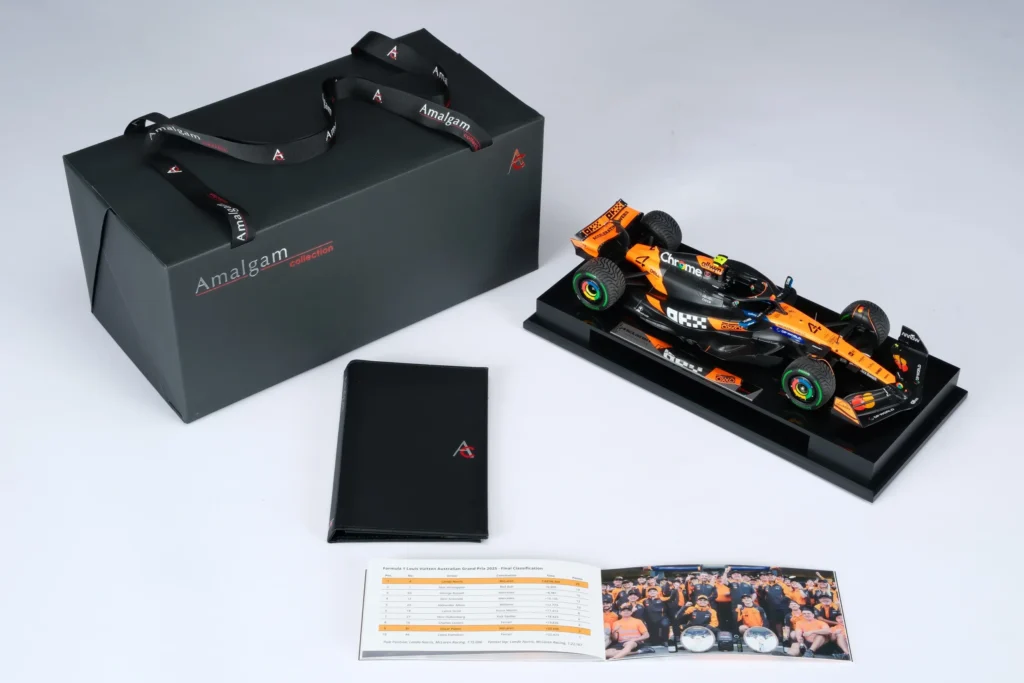 Can you tell us about making the models?
There are two parts to the process. First, the development of the model, which usually takes between 2,500-5,500 hours – F1 cars and modern GTs take less time because we can receive the authentic CAD data from the marques, whereas with classic cars that’s not available, so we need to make an incredibly accurate digital scan of the original car. We also take around 1,000 photos of the car, giving us precise visual reference for designing each part of the model, the finishes and any specifications. Then, we make original components out of various materials – whether resin, metal or something else – to represent the materials as accurately as possible. Finally, we build the model itself, which takes between 250-550 hours.
You also have a weathering process, which recreates how the cars look after specific races. Could you tell us more?
Often, with the most iconic cars and races, there are specific details that capture a moment in time – particularly with endurance races like Le Mans. Dust and dirt, wear and tear. Little dents for marks from touches with other cars along the way, for example. The 1969 Ford GT40, which won the 24 Hours of Le Mans with Jacky Ickx and Jackie Oliver, famously had finger-marks on the front of the car. These are the details that tell the story of these cars, and that we’re able to immortalise through our weathering process. We use different painting and airbrushing techniques on multiple layers to recreate these effects on the models. One recent example is our limited-edition weathered McLaren MCL39 – driven by Lando Norris in the 2025 Australian Grand Prix – which raced partly in the wet, so it’s a great opportunity to show all the dirt distributed over the car, revealing patterns produced by the aerodynamic flows driving the rain across the surfaces at speed.
Why do you think Amalgam’s scale models are so appealing to automotive fans?
Every car has a fascinating story and history, and that’s the feeling that we’re trying to capture. Take the Ferrari SF-25, which celebrates Lewis Hamilton’s debut drive for Scuderia Ferrari HP. It’s being able to possess something that is a constant reminder of that excitement – whether it’s a momentous win, a daring rally or an iconic moment in automotive history. But there’s something else that goes on, which is the little frisson of excitement about the actual model being a miniature thing – it’s the same feeling that you get from watches. It’s about channelling the passion and craftsmanship of the model-maker – and the car’s engineers – to bring something to life in miniature.