




This website uses cookies so that we can provide you with the best user experience possible. Cookie information is stored in your browser and performs functions such as recognising you when you return to our website and helping our team to understand which sections of the website you find most interesting and useful.
Interview: Composer Max Richter on Hamnet, Krug and turning champagne to music
By Shivani Dubey | 18 February 2026 | Culture, Food & Drink
Oscar-nominated composer Max Richter talks scoring Hamnet and reveals how he turned champagne to music with Krug chef de cave Julie Cavil
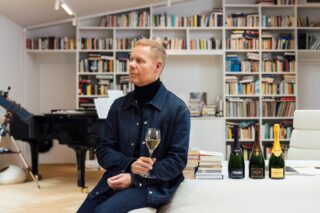
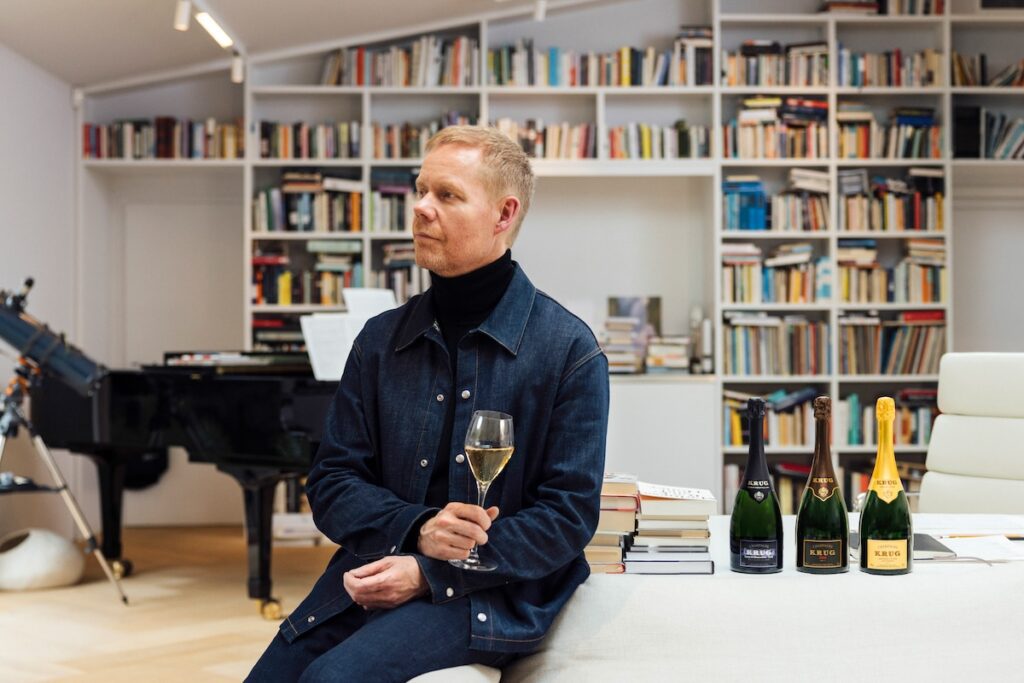 When world-renowned composer Max Richter and Krug chef de cave Julie Cavil met, it was a symphony of taste and sound. Music, says Julie, has always been a vital part of Krug – a special ingredient in all its wines and champagnes. So it was a no-brainer for Max to compose music compositions with Krug. Fresh from a best original score Oscar nomination for his work on Chloé Zhao’s Hamnet, Max worked with Krug and Julie to create ‘Krug from Soloist to Orchestra in 2008 (Act 2)’ – a musical collaboration inspired by three different Krug cuvées from 2008.
The first piece is Clarity, a piece for solo inspired by Krug Clos d’Ambonnay 2008, capturing the purity of a single plot, grape, and year. Then comes Ensemble, where Krug 2008 becomes a chamber composition that evokes the ideal circumstances of the year 2008. And finally, the Krug Grande Cuvée 164ème Édition becomes Sinfonia – an orchestral expression of Champagne.
This collaboration was brought to life by Krug and Max with a special performance of the three compositions at Roundhouse in London on Tuesday 10 February, with actors like Pierce Brosnan, Daisy Edgar Jones, Kristin Scott Thomas and Lily James in attendance. An experience that, Max says, was incredibly special, due to the singular shared experience with the audience.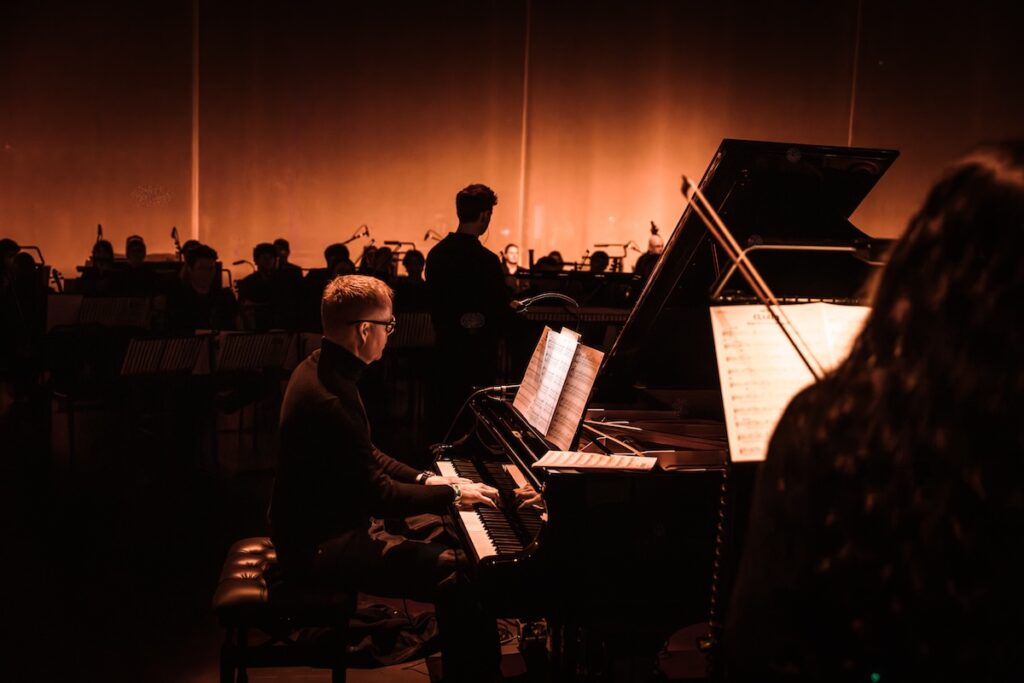 “There is something about live music performance which is special. It’s people in a room together, making a shared story,” he tells Tempus. “It’s unique, in real time – it happens only once, in that place, with those people.”
So how does one go about translating taste to music? For Max, it was about immersing himself into the world of Krug and experimenting with tastes and the feelings they evoke.
“I had a starting point, which was my visit to the vineyards, the cellars and doing tastings, so I had a big reservoir of experiences to draw from. It was an intuitive process of experimenting, finding something [through trial and error] that feels inevitable and authentic and can tell a story. It was really about feeling,” he explains.
“I’m trying to make it almost like a parallel text, reflecting the essence of what my experience of the champagne is,” Max elaborates. This meant drawing on the multisensory elements like “texture, light, time, earth, wind, the temperature that day, the history, culture and the people”.
Related: Ian Somerhalder on how The Vampire Diaries shaped Brother’s Bond Bourbon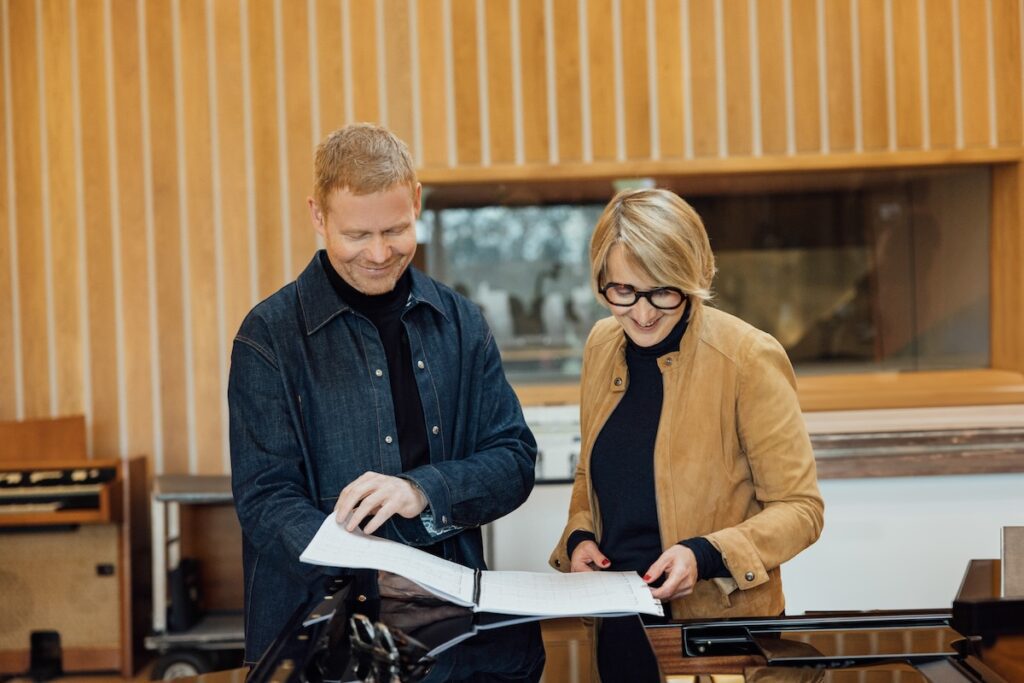 Music and taste are wildly different sensory experiences, and you wouldn’t normally think there’s a way to find similarities between the two, but one uniting factor here was time. Winemaking is a cultural practice, says Max. It is an expression of people in a place over time with a very specific aim. It’s part science, part art, but there is a classicism in a way that unites it with music.
“Musical languages are things that have evolved over time. When I write a G minor chord, it’s something Bach wrote too, but we all bring our own sensibility of the now into how we handle those materials. And I was impressed by the role of time in champagne, and that was a very good jumping off point,” he says.
“Generally speaking, we offer the same objective,” Julie agrees. “We need to offer something unforgettable, which is all around simple pleasure – whether it is music or champagne – and it takes a huge amount of work behind the scenes to make it look effortless.”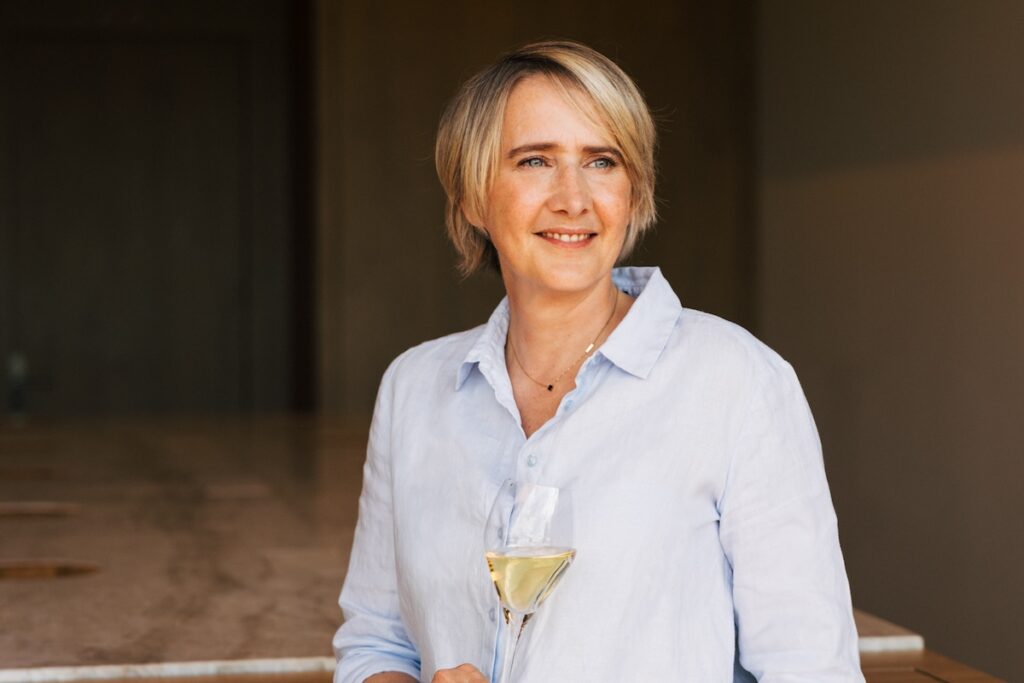 To Julie, who has been a part of Krug for 20 years, Max was the perfect match for this project thanks to his love for Krug (“My kids are all Krug babies!” laughs Max), and the brand’s long history with music. For her, music is a language that translates beyond melody, helping her connect with Krug’s growers in a way that is completely unique. It forces them to push the limits, and reach a sensation that brings everyone to the same wavelength.
“Nowadays, it’s completely natural,” she says of the role of music at Krug. “Even when I speak with the growers we work with, I use music to communicate because it really helps to understand, when they taste the results of their work after harvest, the decisions that they made during the growing process. Then we feedback and help them adjust their instruments for the next year. It’s a very universal language.”
And while Julie tends to stay away from music when working so she can stay ultra focused at juggling the multiple projects she’s part of, when it comes to the tasting room, she has discovered that sound is a vital part of the journey – especially when explaining it to someone with a musicality like Max’s.
Related: Johnnie Walker announces Blue Label collab with Robert Wun for Chinese New Year 2026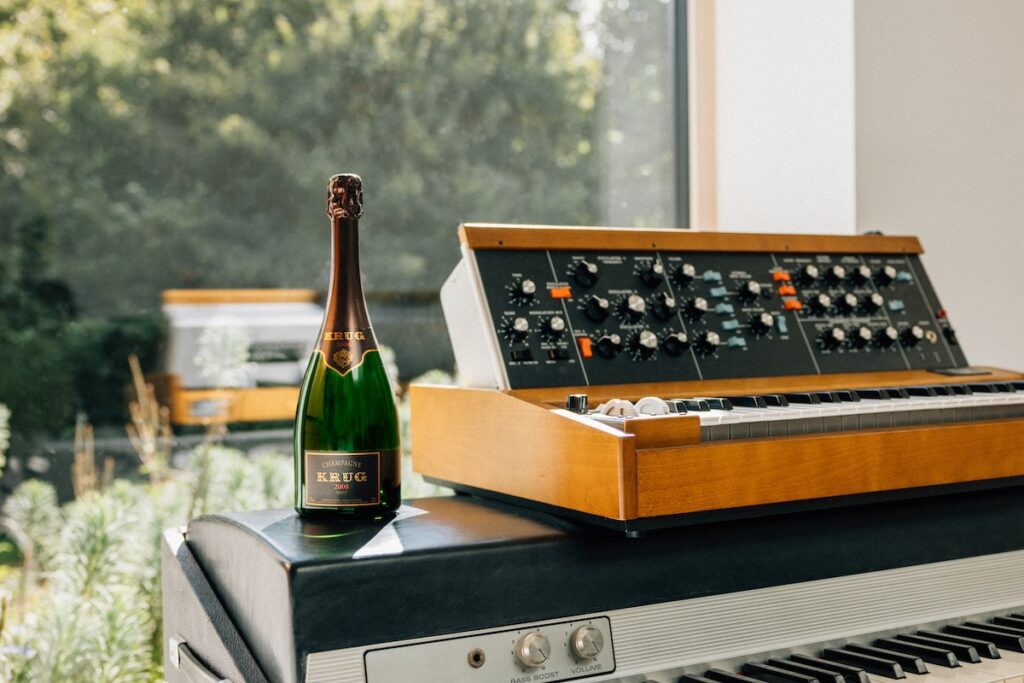 “What I learn more and more each time we go on this journey is that in the tasting room, each time we taste a sample, we don’t look for perfection, we look for singularity,” says Julie. “It’s about the smell, taste, shapes, maybe colours, and now, in working with Max, sounds. It’s crazy. It adds another sense to the tasting room.”
Turning taste to music is one thing, but how does that compare to composing a score for a film production like Chloé Zhao’s Hamnet? For Max, who is a first-time Academy Award nominee for his work on this project, it was similar to his process with Krug, where he kept chipping away at it until he found something that felt natural.
“Hamnet is a special project,” beams Max, recalling the experience. “Chloé is a visionary. It’s an extraordinary piece of filmmaking, and Jessie [Buckley, who plays Agnes] and Paul [Mescal, who plays Shakespeare] are amazing in it.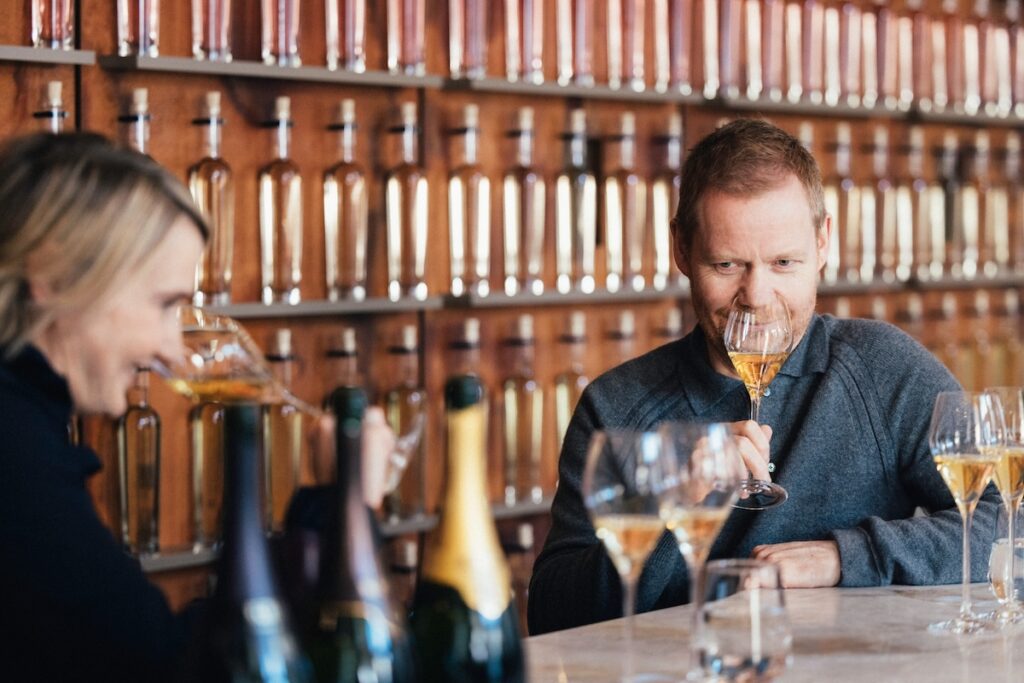 “Obviously, the medium is different, but my aim is the same. I’m trying to discover music that feels like it lives innately in that world. In the case of Hamnet, I was spending time with the material until it felt like it was resonating out of the picture and the psychology of the film seamlessly. So it’s not that it disappears, but it has to feel so natural and inevitable that it can then just be part of that world,” he explains of his process.
This is exactly how he worked with Krug as well, throwing away everything until what was left felt really natural as a connection with the champagne. Julie agrees, recalling the tangible bond she felt between music and champagne when she visited Max at his studio in the Cotswolds.
From tasting and testing blends until you achieve the right taste to playing with levels and other musical nuances in a studio until you achieve perfect harmony, “we are all directly connected by something bigger than ourselves,” says Julie. It was a reminder that “you will always have a lot of harmony to find”, all you need to do is take the time and look.
Images: Krug