
Tailoring Time: The secret to wearing a vintage timepiece well
By Alan Wood | 26 March 2026 | Style
Vintage Gold Watches London shares the secrets behind wearing a vintage timepiece well, and why the most powerful accessory in a room rarely raises its voice
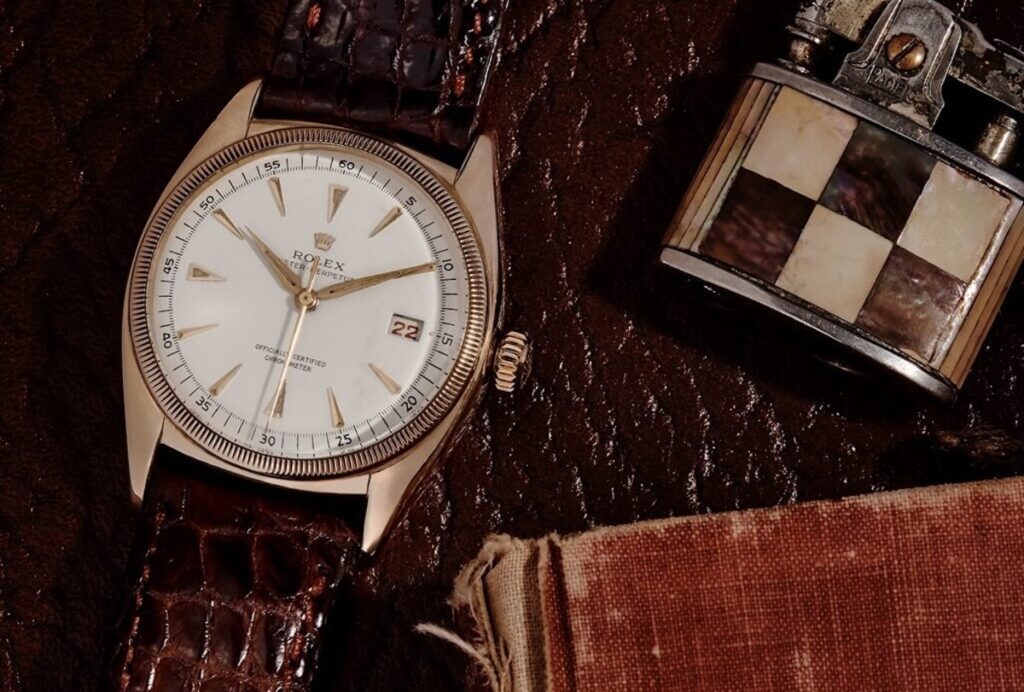 Watches and tailoring have always shared a symbiosis. Both involve proportion, material, finishing and quiet personal expression. When a well cut jacket meets a well chosen timepiece, the effect is greater than the sum of its parts. The watch becomes the punctuation mark of a person’s appearance, revealing something about their taste without needing to declare it. And in an age where garments are cut closer to the body and wardrobes lean towards refinement, vintage watches have never felt more relevant.
Collectors often talk about calibres, reference numbers and auction results, but very few explain how to wear a vintage watch well. The right choice does not simply tell the time. It lends authority to a suit, telegraphs sensibility and anchors an outfit in something more permanent than seasonal fashion.
A mid century gold dress watch sits comfortably in this world, bringing artisanal craft into the present day. The person who wears one is not playing at nostalgia. They are deepening the story of their clothing.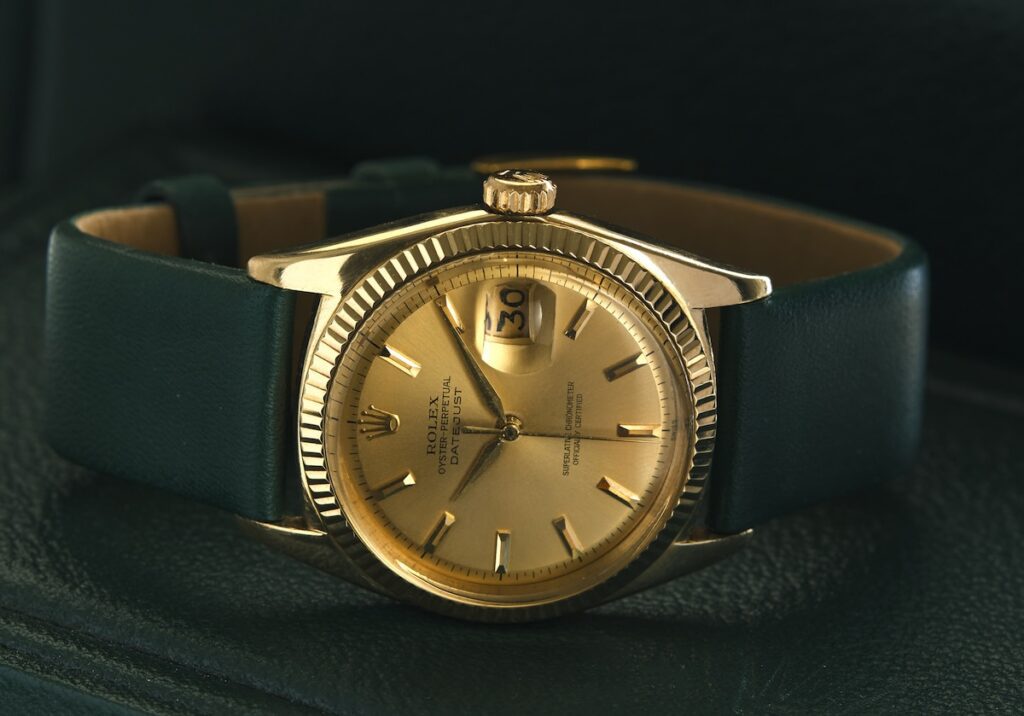 Why vintage works so well with tailoring
Vintage watches from the 1950s through to the early 1970s were produced for men who lived in suits. Watchmakers designed around cuffs, shirt plackets and a slimmer silhouette. Cases were balanced, lugs were elegant and diameters sat at the sweet spot where discretion reads as strength. Tailoring has returned to this mood. Lapels are classic rather than oversized, jackets have shape without aggression and fabrics lean toward substance and texture.
A vintage watch slips into this landscape with ease. The patina of an aged dial or the gentle glow of yellow gold sits naturally against flannel, cavalry twill, linen or a crisp shirt. Modern luxury has moved towards understatement. A vintage Omega, IWC, Longines, Jaeger LeCoultre, Patek Philippe or Rolex rewards that sensibility. It does not seek attention, yet always earns respect.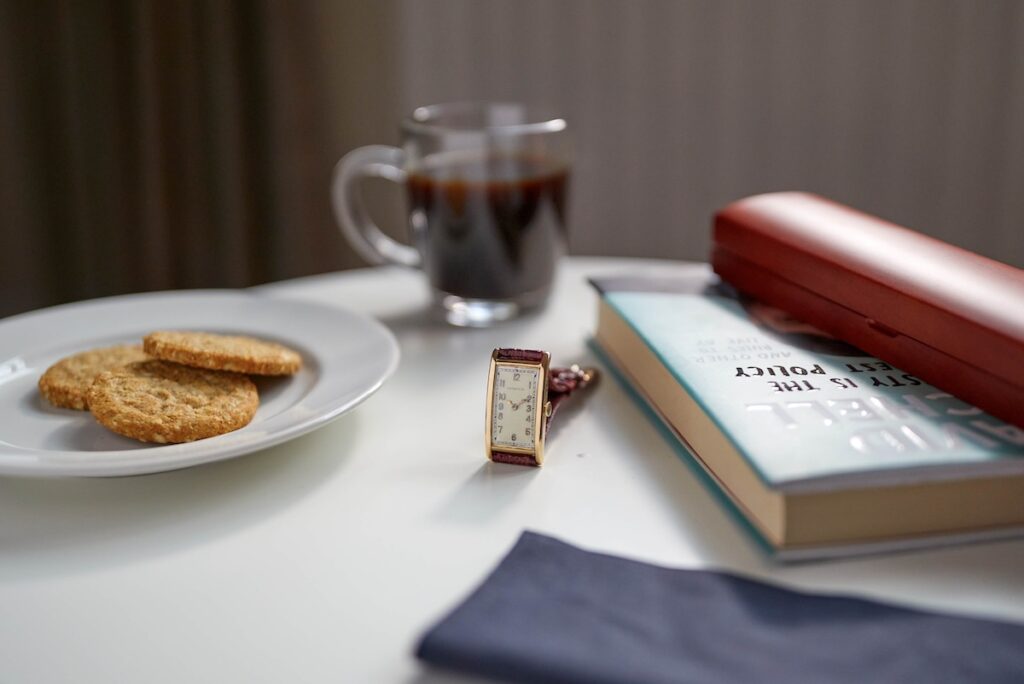 Proportion: the first and most important rule
Tailoring succeeds when every line is in harmony. The same is true of watches. Vintage dress watches usually measure between 33 and 36mm, which can surprise newcomers used to larger contemporary sports pieces. Yet once paired with a well cut jacket, this size looks perfectly judged. What matters most is the relationship between case diameter, lug length and wrist size. Vintage lugs are often long and refined, which creates an impression larger than the raw measurement suggests.
A 34mm Calatrava or Seamaster De Ville can look impeccable on the wrist of someone who would never consider the same figure on a modern diver. Pieces such as the Rolex Oysterdate Precision 6694, Omega Seamaster De Ville Ref. 166.020 or Longines Flagship from the late 1950s demonstrate how restrained dimensions can appear perfectly judged on the wrist.
When assessing balance, place the watch on the wrist then drop the hand to your side. The case should anchor the cuff, not fight it. The more understated the watch, the more powerful it becomes. Tailoring gives it context and proportion gives it authority.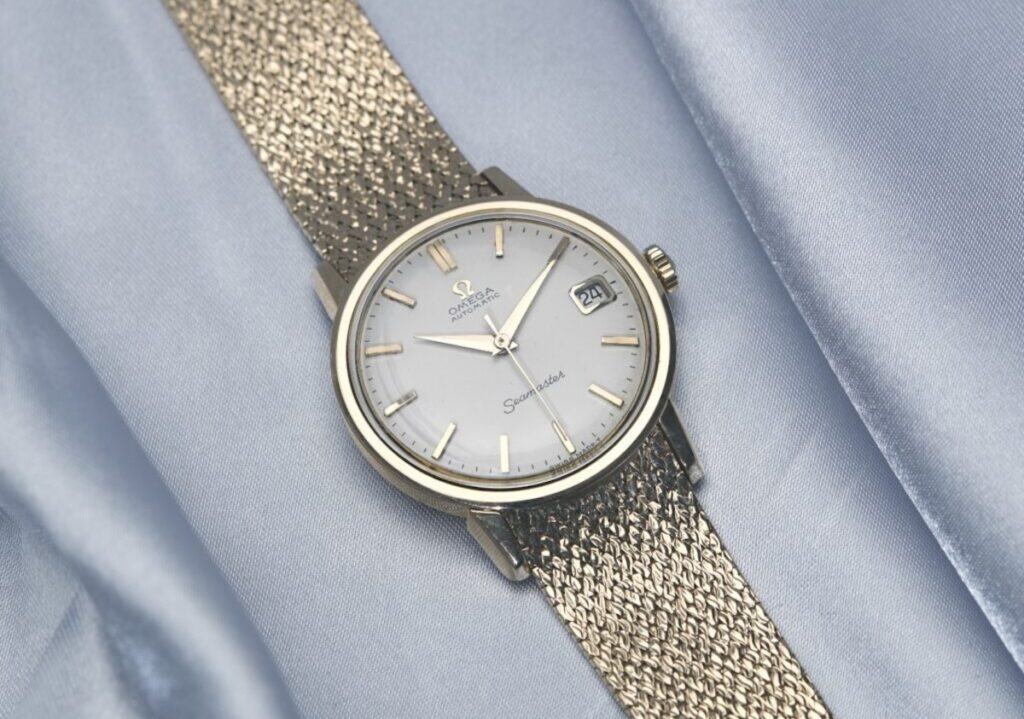 Metal, colour and wardrobe harmony
The metal of a watch is one of the quickest ways to integrate it into a tailored wardrobe. Each tone speaks differently. Yellow gold is the archetype of mid-century dress watches. It flatters navy, charcoal and cream and carries a sense of heritage that works particularly well with English tailoring, structured shoulders and heavier cloths. The Omega Constellation pie pan in 18ct gold or a Patek Philippe Calatrava 3445 are classic examples of this.
Rose gold offers a subtler alternative. Its softer hue works beautifully with blues, mid greys and textured suits. A rose gold Jaeger LeCoultre Futurematic or Vacheron Constantin Patrimony from the 1960s can feel almost purpose-made for soft tailoring and evening light. White gold and steel bring a precise, architectural quality. They work with sharper silhouettes, tonal dressing and monochrome palettes. They speak well with French and Italian tailoring where line and silhouette take precedence over heft and tradition.
The dial is equally important. Silvered dials read formal and crisp. Champagne dials lean towards evening or occasions. Black dials carry weight and look wonderful with velvet, dinner jackets and winter tailoring. This harmony of metal, colour and textile is where true elegance lies.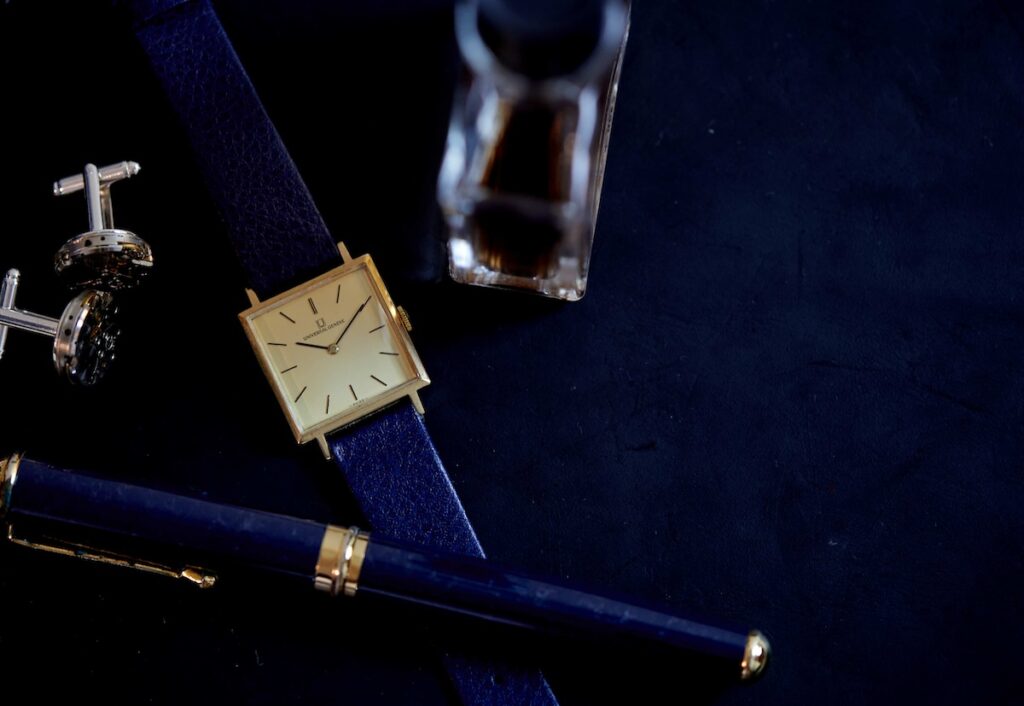 The details that reveal quality
A modern tailored look thrives on detail: the roll of a lapel, the pitch of a sleeve, the drape of a trouser. Vintage watches reward the same attention. Collectors look for applied indices, Dauphine or baton hands, balanced typography and crisp hallmarks, which is often the best evidence of a watch that has never been aggressively polished. These traits matter because they are not fashion – they are evidence of care in manufacture and care in ownership. When paired with tailoring, these qualities create continuity.
Complications and when to use them
Complications can be worn with tailoring, but they require discretion. A date window is perfectly acceptable for daily wear. A tasteful moonphase or sub seconds dial introduces personality without excess. Chronographs are best reserved for casual tailoring where the watch becomes part of a more relaxed character. Dress watches were created to complement the suit, not compete with it. Their power lies in restraint.
Straps: the quiet finishing touch
Most people underestimate the role of the strap, yet it can make or unmake the entire impression. For workplace suits or occasion wear, opt for smooth calf or lightly glazed alligator in black, dark brown or blue. The strap should taper elegantly and the buckle should be discreet, polished and proportional. For soft tailoring or weekend attire, nubuck or suede introduces texture and nonchalance. A champagne dial on rose gold with a warm brown suede strap can make a modern unstructured jacket sing. Black tie is simple. Keep the strap slim, clean and black. Let the dial do the talking.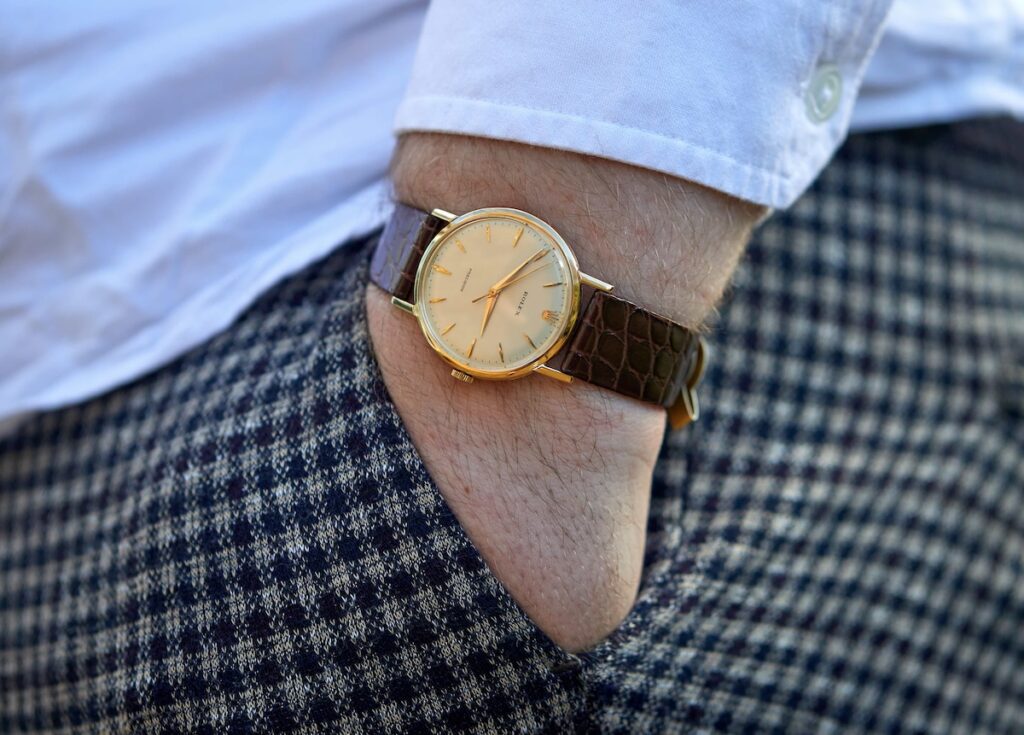 Choosing a vintage watch for the modern gentleman
A refined wardrobe deserves a watch that reflects the same standards. Consider proportions first – choose a watch that sits in harmony with your wrist and your tailoring. Then comes the honest condition – original dials with crisp printing and unsoftened edges hold value and age gracefully. Finally, provenance and service – a vintage watch deserves proper care. Buy from a seller who provides clear photographs of movement and case, explains originality and backs the piece with a meaningful warranty.
The final mark of good taste
Vintage watches are not accessories, they are instruments of character. When paired with modern tailoring they transform an outfit into a statement of intent. As tailoring becomes more refined, the role of the watch becomes ever more important. A mid century dress watch from one of the great Swiss houses delivers elegance that feels timeless and completely contemporary.
It is the rare object that looks appropriate everywhere, whether stepping out of a Mayfair townhouse, settling into a boardroom or raising a glass at a private dinner. A watch is never an afterthought. It is the final line of a well constructed sentence.
The rules are not complicated. Choose proportion over volume, harmony over noise, craftsmanship over novelty. Do that and the watch will do the rest. The right vintage timepiece does not simply accompany modern tailoring. It makes it sing.