






This website uses cookies so that we can provide you with the best user experience possible. Cookie information is stored in your browser and performs functions such as recognising you when you return to our website and helping our team to understand which sections of the website you find most interesting and useful.
An Icon Reimagined: A closer look at the return of Louis Vuitton Monterey X Gae Aulenti
By Tempus | 17 February 2026 | Design
Timeless contemporary design powered by savoir faire – Tempus takes a closer look at the return of the Louis Vuitton Monterey X Gae Aulenti
 Visionary architect Gae Aulenti was one of the defining European design forces of the 20th-century, contributing her distinctive postmodernist style to landmarks including the Musée d’Orsay, Paris, and Venice’s Palazzo Grassi. But her 1988 collaboration with atelier Louis Vuitton, in partnership with IWC Schaffhausen, to create the IV I and II – the maison’s first ever wristwatches – began a tradition of fine watchmaking that the brand can trace to today’s extraordinary Swiss manufacture courtesy of Louis Vuitton La Fabrique du Temps. Now, the new Louis Vuitton Monterey X Gae Aulenti presents a refined contemporary expression of these stylish, collectible original timepieces, made in entirety by La Fabrique du Temps, Louis Vuitton’s manufactory near Geneva.
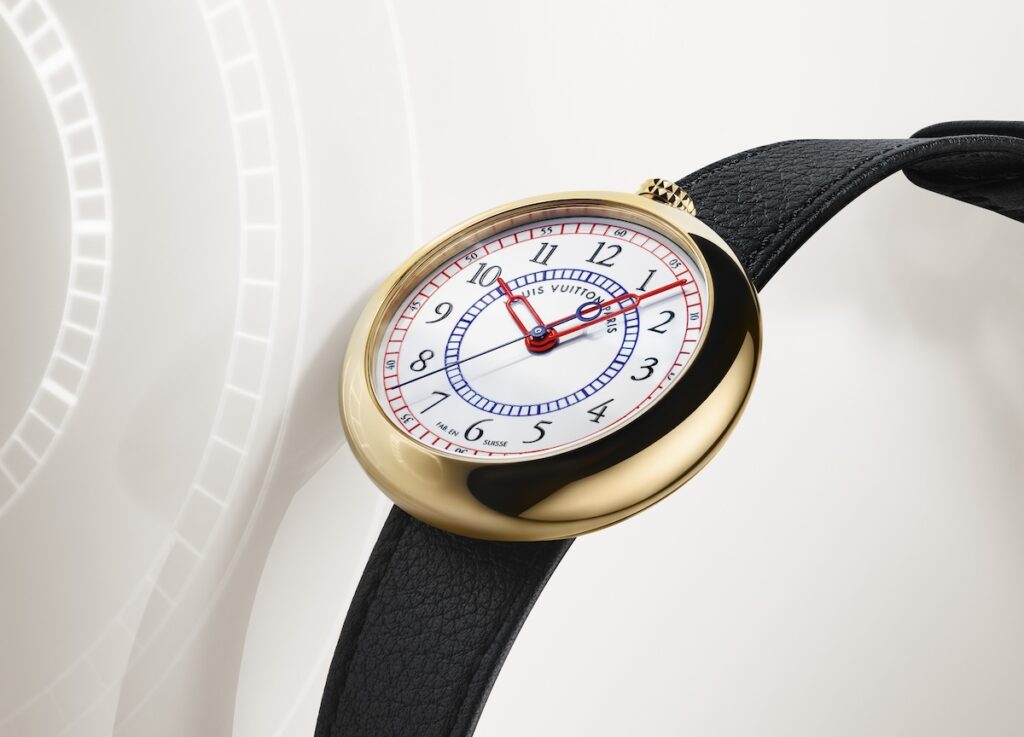
The limited edition tribute is made up of just 188 pieces, bringing Gae’s signature minimalist profile, lug-free construction and crown-at-twelve positioning into the contemporary age.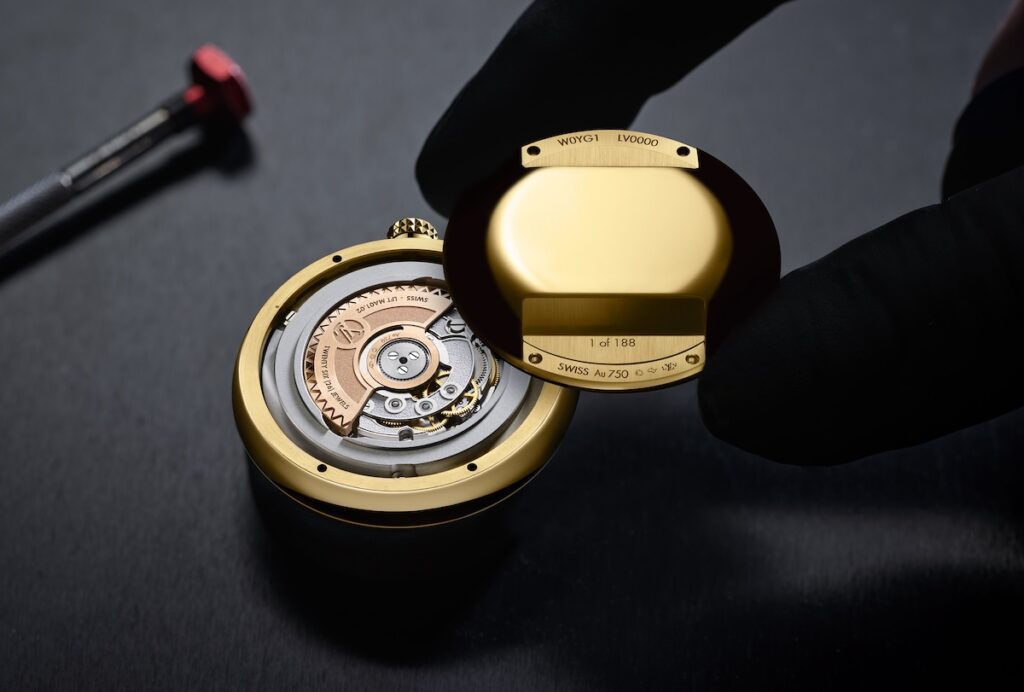 Powered by the maison’s in-house automatic calibre LFTMA01.02 (which boasts a 45-hour power reserve). The new 39mm case is crafted from 18-karat yellow gold, retaining the distinctive pebble-shaped, lug-free form that made the original so revolutionary. The crown’s position at 12 o’clock is a nod to vintage pocket watches – the original inspiration behind the timepiece – and highlights the pared-back clarity of the time-only dial.
Designed under the direction of the brand’s artistic director Matthieu Hegi, the modern dial features Grand Feu enamel, fired at temperatures between 700°C and 1,200°C to create a porcelain-like gleam. Red hour and minute hands reference the 1988 original – and are matched beautifully by the red and blue railway-track hours and minutes markers that race around the dial.
“Reinterpreting a creation means respecting its design and spirit,” says Matthieu of honouring the timepiece with this stylish reinterpretation. “We maintain the same graphic codes, but strive for a more modern and elevated feel.”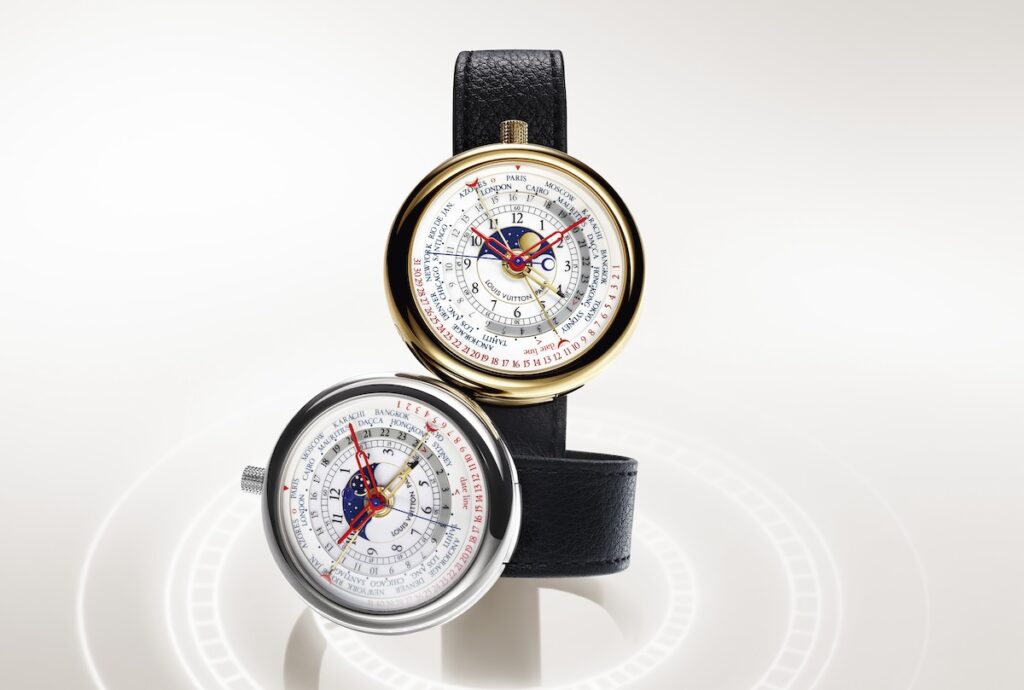 PERSONALITY AND PRECISION
Born Gaetana Emilia Aulenti in 1927, the Italian architect was one of only two women to graduate in her Milan Polytechnic University class in 1954. In an era where architecture was overwhelmingly male-dominated, Gae shone as a beacon of originality and style throughout her international six-decade career.
She was known for her involvement in the neo-liberty movement – building continuity between historical and contemporary architectural styles rather than completely breaking from the past. This can be seen in her works from building design to the LV I, which clearly references the pocket watches of the earliest personal timepieces while being distinctly and unerringly modern.
Gae’s impact is best seen in the Musée d’Orsay, Paris. The at-first controversial project, completed in 1986, saw her transform the discontinued Gare d’Orsay (train station) into one of the French capital’s most important museums. She received the country’s highest honour, the Legion d’Honneur, in 1987.
Her portfolio also included Venice’s Palazzo Grassi, Paris’s Centre Pompidou, Barcelona’s Museu Nacional d’Art de Catalunya, and the San Francisco Asian Art Museum. She was known for her work as an industrial designer, as well as designing showrooms for Fiat, Olivetti and Knoll.
“I am convinced that architecture is tied to the polis,” Gae said, explaining how her mix of styles and aesthetics blended into a fluid, holistic design. “It is an art of the city, of the foundation, and as such, it is necessarily related and conditioned by the context in which it is born.”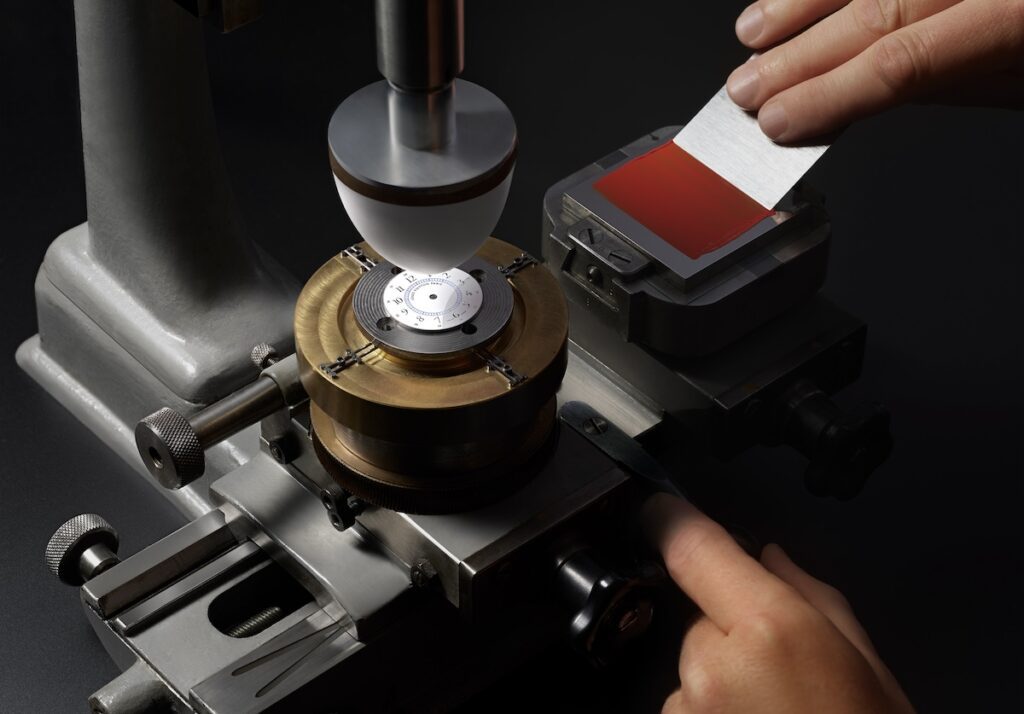 DESIGN OF THE TIMES
For Louis Vuitton, bringing such a cult classic into the modern age meant finding the balance between heritage and reinvention. On the surface, it would seem that minor differences set the two watches apart: the diameter of the original LV I was a millimetre larger, it contained a complex quartz movement courtesy of partner watchmakers IWC, and packed in more complications. The IV II, at just 37mm diameter, made ground-breaking use of ceramic for its case material.
Both stood out from the crowd thanks to Gae Aulentis distinctive case profile and crown position, opening up the watch face in an optical illusion that, to this day, defies traditional watch design.
Interestingly, the name Monterey reportedly emerged when the watch hit the US market and the local pronunciation of ‘montre’ (French for ‘watch’) evolved organically into the name we now know.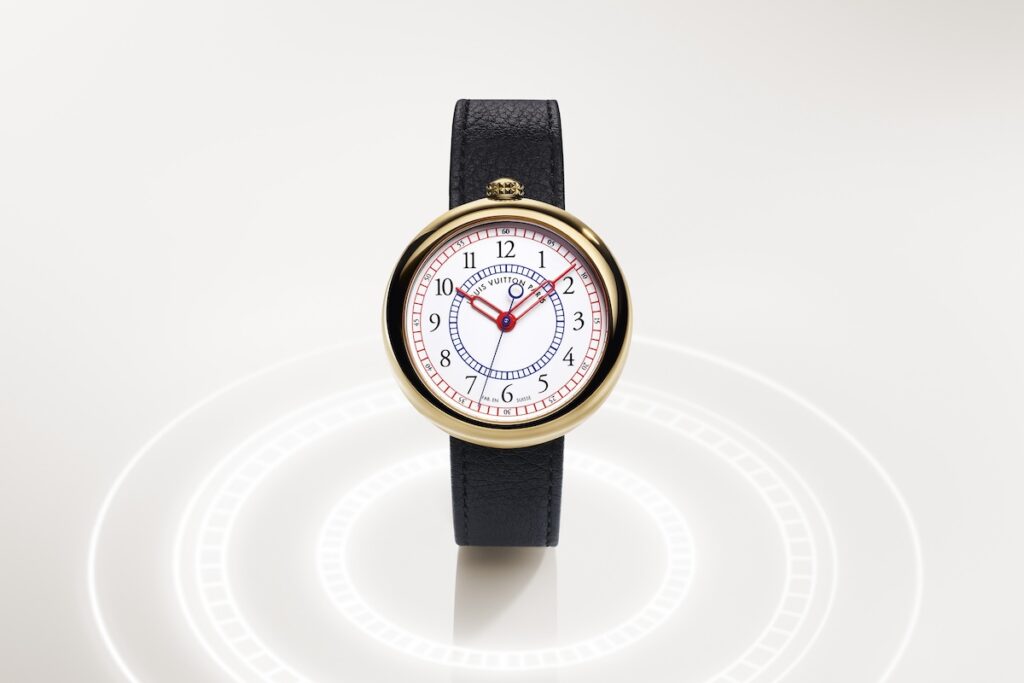 In comparison to these ground-breaking techniques, the contemporary savoir faire of La Fabrique’s Metiers d’Art team is no less impressive for its subtlety. The beautiful glossy dial is crafted through 20 hours of Grand Feu enamel work, with multiple firings at 800-900°C to create an elegant, porcelain-like base from which the design notes can pop.
La Fabrique’s in-house calibre is completely enclosed in the gold case, while the movement, also in-house, was developed from the Louis Vuitton Tambour Taiko Spin Time collection. The result is a timepiece that highlights what made the original watch architecture so special – and built entirely from within the maison.
Although she died in 2012, Gae’s timeless style lives on both in the architectural brilliance in the cities she worked and in Louis Vuitton’s reinvention of the Monterey, which so fittingly transforms the ever-evolving designer’s concept into a masterpiece for the modern age.